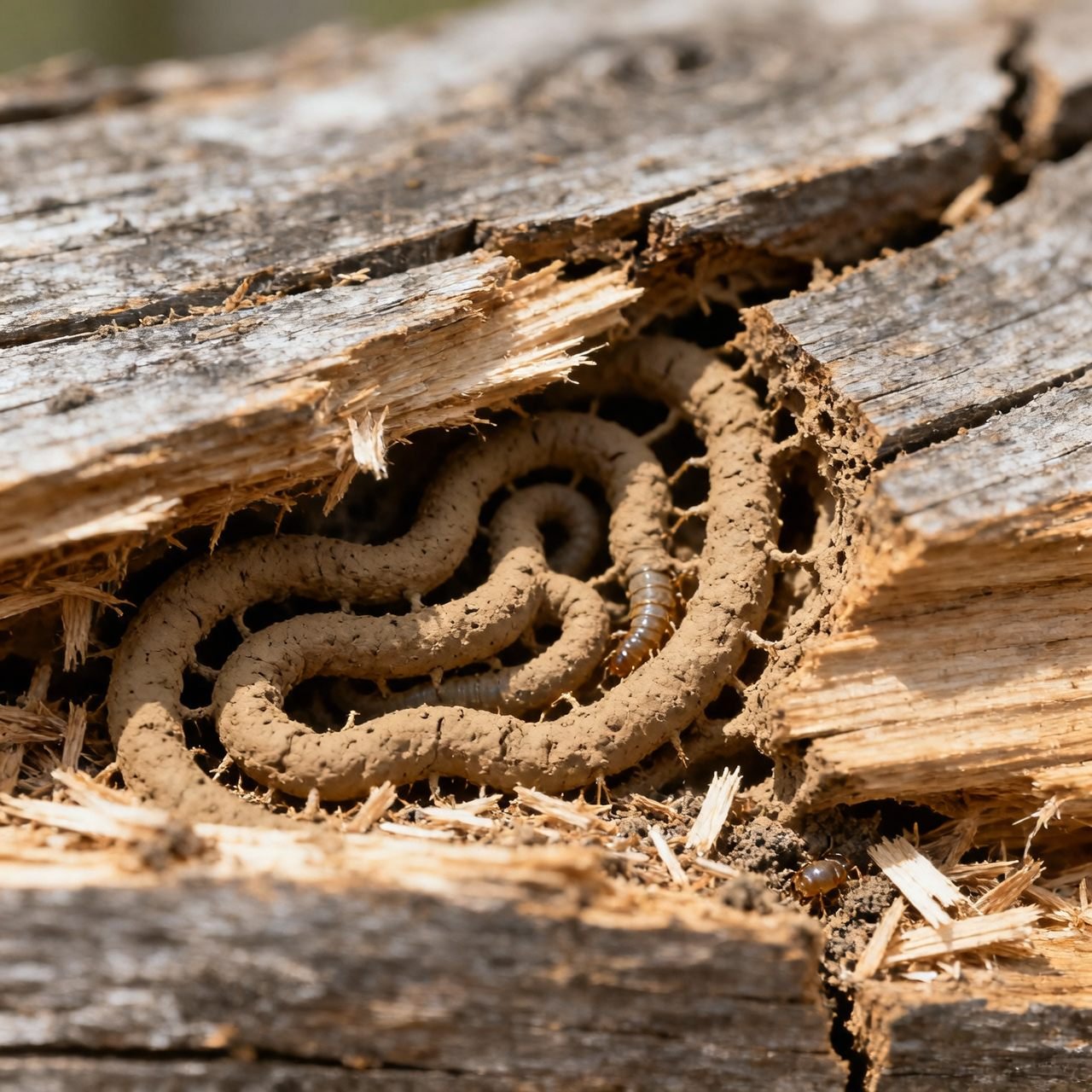
Carpenter ants are the large black (or dark red-and-black) ants you might spot trailing along a baseboard, deck rail or tree at night. Unlike termites, they don't eat wood — but they excavate smooth galleries in it to nest, and in Tallahassee's humid, tree-shaded environment they're right at home. Left alone, a large colony can do real structural damage over time.
The moisture connection
Here's the key insight most homeowners miss: carpenter ants strongly prefer moist or previously damaged wood. A carpenter ant nest inside a Tallahassee home very often points to a hidden moisture problem — a roof or plumbing leak, poor drainage, condensation, or wood-to-soil contact. Treating the ants without fixing the moisture is a temporary win. We look for both.
How do I know it's carpenter ants?
The tells are: large ants (up to about half an inch), most active at night, and small piles of what looks like coarse sawdust — actually "frass," wood shavings mixed with insect parts — beneath the nest area. You may also hear a faint rustling in a wall void. Winged swarmers indoors in spring point to an established nest.
Carpenter ants vs. termites
Both damage wood, and telling them apart decides the whole treatment. Carpenter ants leave clean galleries and push out frass; termites eat the wood and leave mud or pellets. If you're not sure, an inspection settles it — see our termite control page, because in Tallahassee it's always worth ruling termites out.
Why store-bought sprays fail: spraying the trail kills foragers while the nest — often hidden in a wall, deck or nearby tree — keeps producing. Baiting that reaches the colony, plus correcting the moisture, is what actually works.
Our approach
We locate the nest (or nests — colonies often have satellites), treat the colony with targeted baits and non-repellents, and identify the moisture and landscaping conditions feeding the problem so it doesn't come back. Trees and limbs touching the roof are a common bridge we'll flag.
Seeing big ants and sawdust piles? Book a free inspection and we'll find the nest and the moisture behind it. For trailing sugar ants instead, see ant control.
Ready for a free inspection?
Tell us what you're seeing. A licensed technician identifies the pest and the entry points and quotes an exact price — with no obligation.