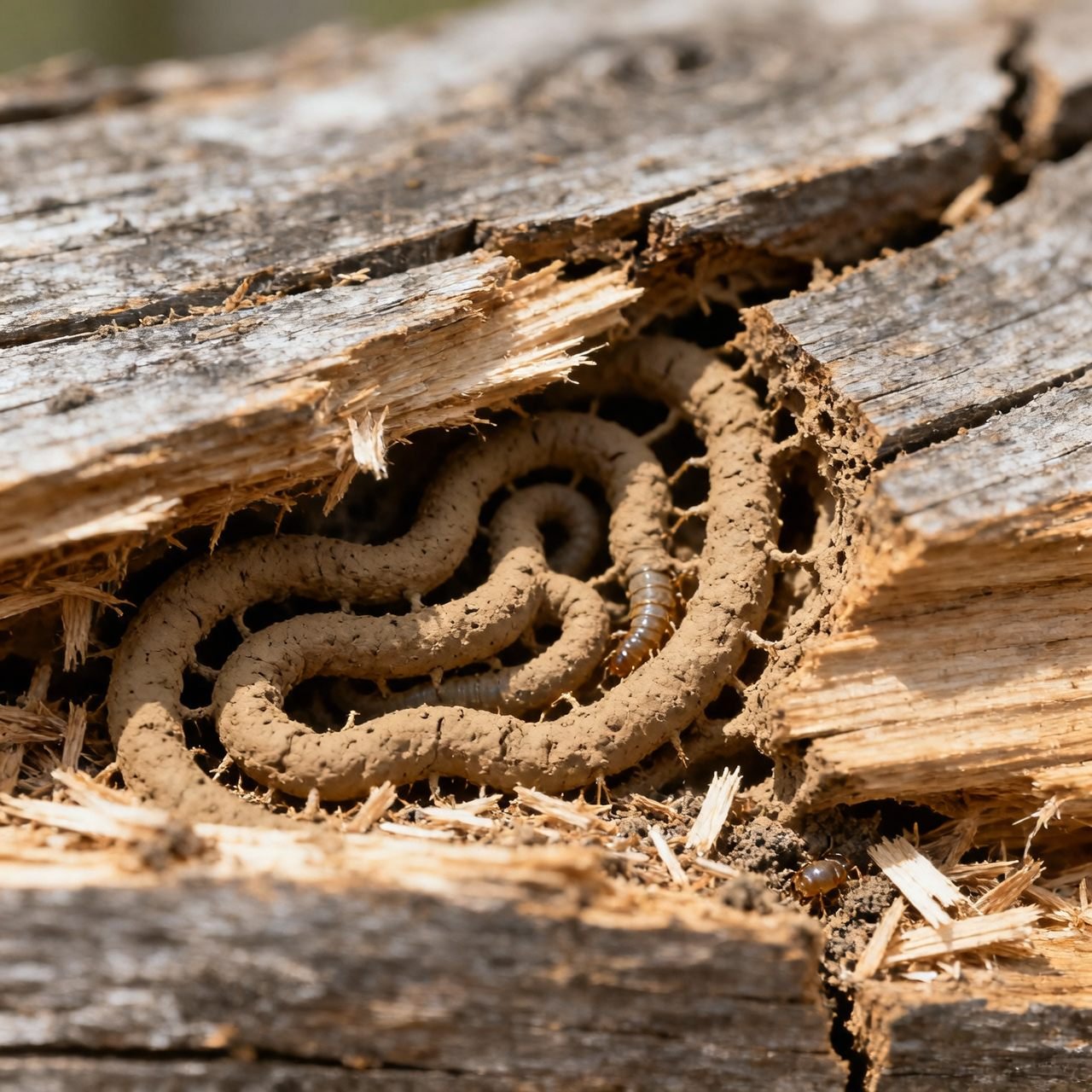
Termites are the one Tallahassee pest that can quietly cost you tens of thousands of dollars before you ever see the insect. Florida is one of the only states in the country dealing with both subterranean and drywood termites — two entirely different species that require two different treatment approaches — and Tallahassee's environment is unusually favorable to both.
Why Tallahassee homes are more vulnerable
Three local factors stack up. The mature oak canopy keeps lots shaded and soil damp, which subterranean termites need. The older housing stock in Betton Hills, Myers Park and Killearn means more exposed wood, more settling cracks, and more decades for a colony to establish. And Florida's mild winters mean termites often stay active rather than going dormant. A home backing up to woods near Wakulla faces even higher pressure.
Subterranean vs. drywood — the difference matters
| Subterranean | Drywood | |
|---|---|---|
| Lives | In soil, enters from below | Inside the wood itself |
| Tell-tale sign | Mud tubes on foundation walls | Pellet piles (frass) below wood |
| Moisture need | High — needs ground contact | Low — survives in dry wood |
| Usual treatment | Liquid soil barrier or bait system | Localized treatment or fumigation |
Treating a drywood infestation with a subterranean plan — or vice versa — is a common and expensive mistake. Correct identification is the whole first step, which is why every job starts with inspection rather than a quoted "termite package."
Signs you should not ignore
- Mud tubes — pencil-width earthen tunnels on foundation walls, piers or crawl-space wood.
- Pellet piles — small ridged pellets that look like sawdust or coffee grounds beneath wood trim.
- Swarmers — winged termites (or discarded wings on windowsills), typically in spring.
- Hollow-sounding or blistered wood, sticking windows, and sagging floors.
- Wood shavings near a window frame — a classic early sign in older Tallahassee homes.
Our treatment options
After inspection we recommend the right method for the species, the construction and the severity: a liquid soil barrier around the foundation for subterranean colonies, an in-ground bait system for ongoing monitoring and elimination, or localized drywood treatment — and, for whole-structure drywood infestations, fumigation. Exact cost varies by method and home size, which is why we quote after inspection rather than over the phone. See termite treatment cost.
Why annual inspection is non-negotiable here
Subterranean termites often go undetected until structural damage appears, because they work from inside the wood outward and from the soil upward. In a drier climate you might get away with checking every few years. In Tallahassee's damp, shaded, wood-rich environment, an annual termite inspection is the cheapest insurance you will ever buy against a five-figure repair. Learn more in our guide on why Tallahassee homes get termites and the two-species breakdown.
Book a free termite inspection and we'll tell you honestly whether you have an active problem, an old inactive one, or none at all.
Ready for a free inspection?
Tell us what you're seeing. A licensed technician identifies the pest and the entry points and quotes an exact price — with no obligation.