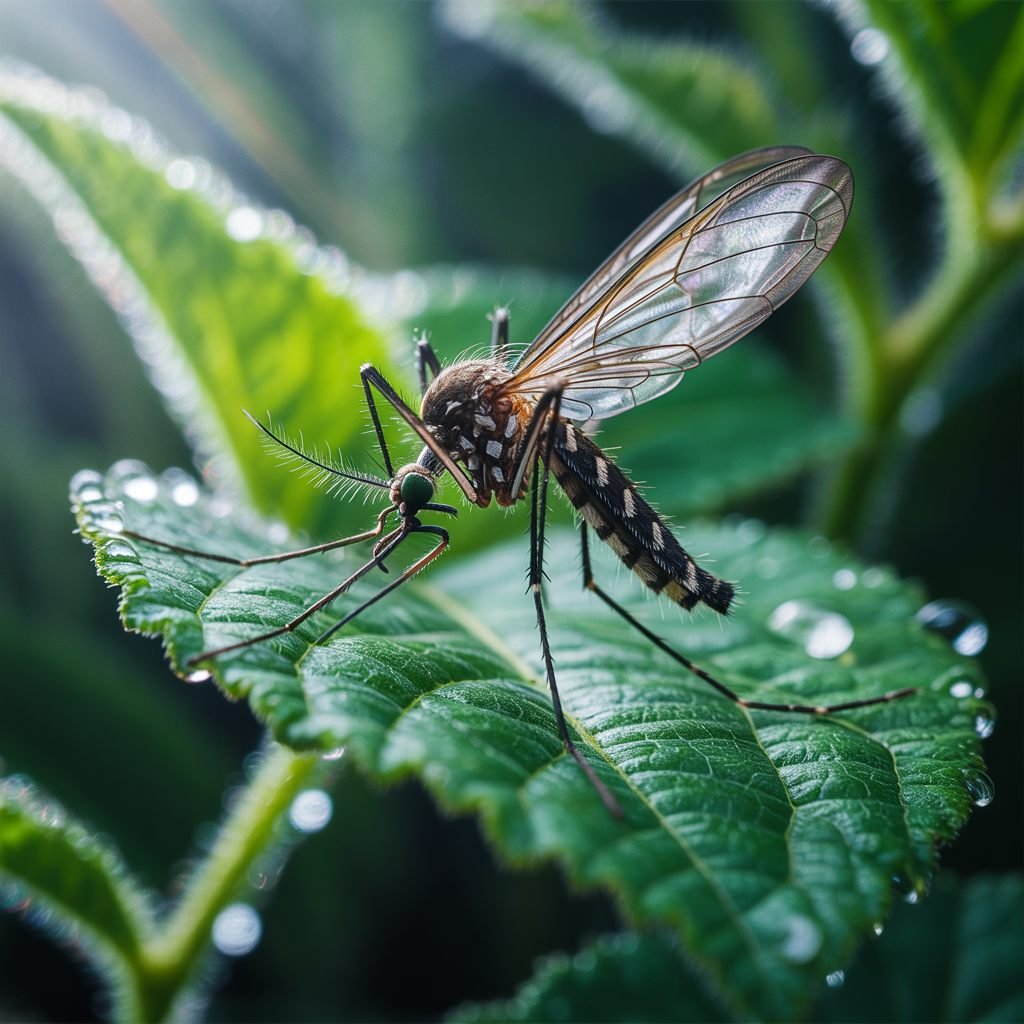
Tallahassee's frequent rainfall, dense tree canopy and humid, shaded yards create some of the best mosquito breeding conditions in the Southeast. They don't just make evenings on the porch miserable — several mosquito species here can transmit disease, and Florida's long warm season means the problem runs most of the year.
Why yards here breed so many mosquitoes
Mosquitoes need only a small amount of standing water to breed — a bottle cap's worth is enough for some species. In a typical Tallahassee yard the culprits are everywhere: clogged gutters, plant saucers, bird baths, tarps, toys, low spots that hold rain, bromeliads, and the shaded, moist landscaping that mature oaks create. The adults then rest in that same cool, humid vegetation during the day.
The two-part fix: source reduction + barrier treatment
Spraying adult mosquitoes feels satisfying but is temporary — new ones emerge from breeding sites within days. Lasting control combines two things:
- Source reduction — we identify and eliminate or treat standing-water breeding sites around your property, and advise on the ones you can fix (gutters, saucers, drainage).
- Barrier treatment — a targeted application to the shaded vegetation and resting areas where adults shelter, knocking down the current population and suppressing new arrivals between visits.
For breeding sites that can't be drained — ornamental ponds, low areas — we use larvicides that stop mosquitoes before they ever reach the biting adult stage.
Seasonal program
Mosquito pressure builds in spring, peaks through the hot, wet summer, and tapers in fall. A recurring seasonal program — typically monthly during peak months — keeps a yard usable rather than fighting a losing battle with citronella candles. Special one-time treatments are also available ahead of outdoor events like weddings and parties.
What you can do between visits: empty anything that holds water twice a week, keep gutters clear, change bird bath water often, and cut back dense low vegetation near patios. These small habits dramatically reduce how many mosquitoes your treatment has to handle.
Protecting pollinators
We time and target applications to minimize impact on bees and butterflies — treating resting vegetation rather than blooming flowers, and following product-specific safety protocols. Effective mosquito control and responsible pollinator practice are not mutually exclusive.
Ready to get your yard back? Book a free inspection and we'll map the breeding sites and quote a seasonal plan.
Ready for a free inspection?
Tell us what you're seeing. A licensed technician identifies the pest and the entry points and quotes an exact price — with no obligation.