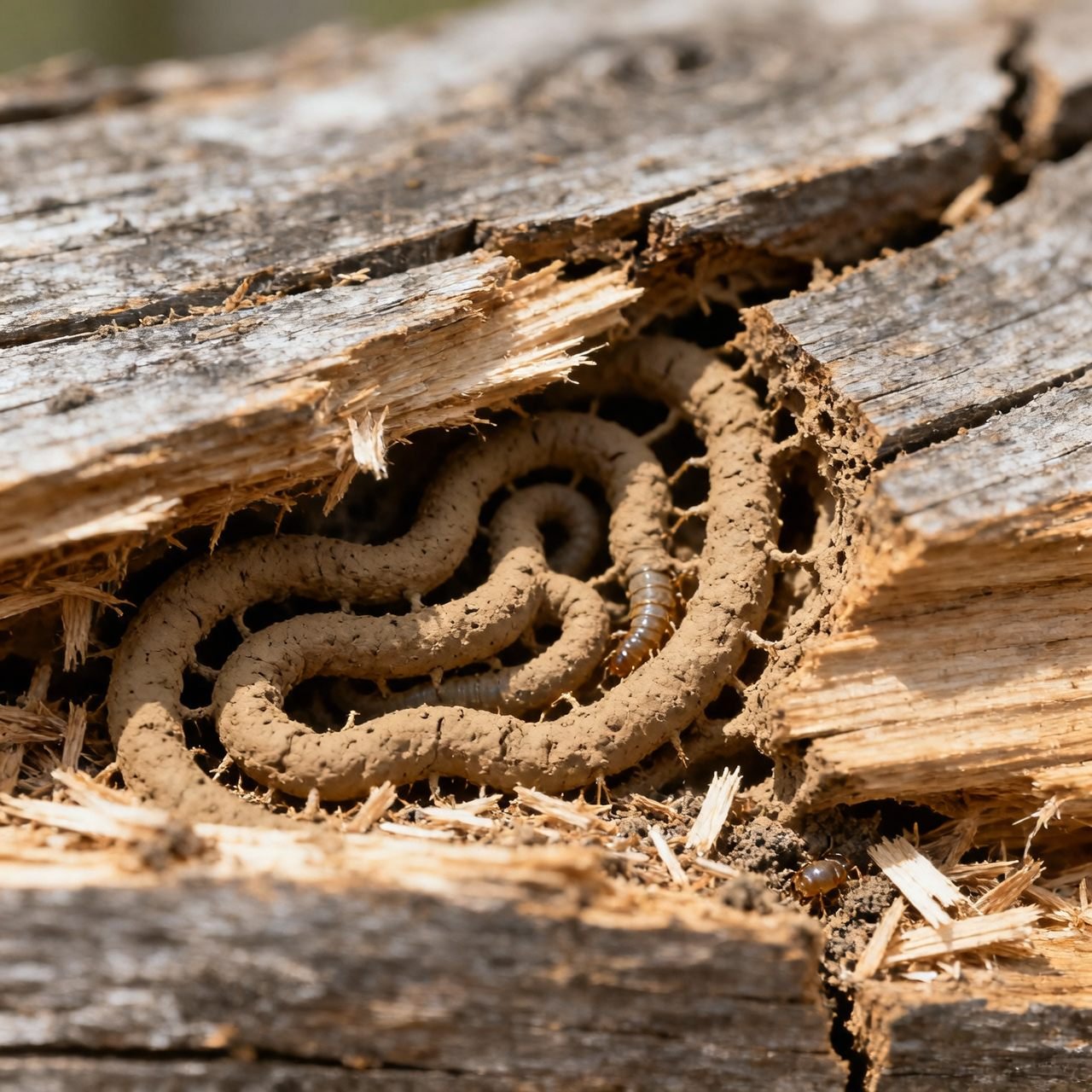
Florida is one of the only states in the country dealing with both subterranean and drywood termites, and Tallahassee sees plenty of each. They're not just two names for the same pest — they live differently, damage differently, and require entirely different treatments. Confusing them is a costly mistake.
Subterranean termites
These live in the soil and enter your home from below, needing constant contact with moist ground. In Tallahassee's damp, oak-shaded lots they're extremely common. The tell-tale sign is mud tubes — pencil-width earthen tunnels on foundation walls, piers and crawl-space wood — which they build to travel between soil and structure. They're the more aggressive of the two in terms of colony size and speed of damage.
Treatment: a liquid soil barrier around the foundation, or an in-ground bait system that colonies feed on and carry back to eliminate the nest. Both work at the soil-structure boundary, because that's where the termites are.
Drywood termites
These live entirely inside the wood and need no soil contact or external moisture — they get water from the wood itself. That means they can infest attics, furniture, trim and framing far from the ground. The signature sign is frass: small, ridged, pellet-like droppings that pile up beneath infested wood, looking a bit like sawdust or coffee grounds.
Treatment: localized/spot treatment for limited infestations, or whole-structure fumigation (tenting) when they're throughout the home. Because they're inside the wood, soil barriers do nothing.
Side by side
| Subterranean | Drywood | |
|---|---|---|
| Lives in | Soil | Inside wood |
| Sign | Mud tubes | Frass (pellet piles) |
| Needs moisture | Yes (soil) | No |
| Treated with | Liquid barrier / bait | Spot treatment / fumigation |
Why the difference matters so much
Treat a drywood infestation with a subterranean plan and you'll spend money on a soil barrier while termites keep eating your attic. Treat a subterranean colony with drywood spot treatment and you'll miss the nest in the ground entirely. This is exactly why every legitimate termite job starts with identification, not a flat-price "termite package." It's also why a quote that doesn't name the species is a red flag — see termite treatment cost.
If you've found mud tubes, pellet piles or swarmers, book a free termite inspection. We'll identify which you have and match the treatment to it. More on termite control and why Tallahassee homes get termites.
Dealing with this pest right now?
A free inspection identifies the pest, the entry points and an exact quote — in writing, with no obligation.