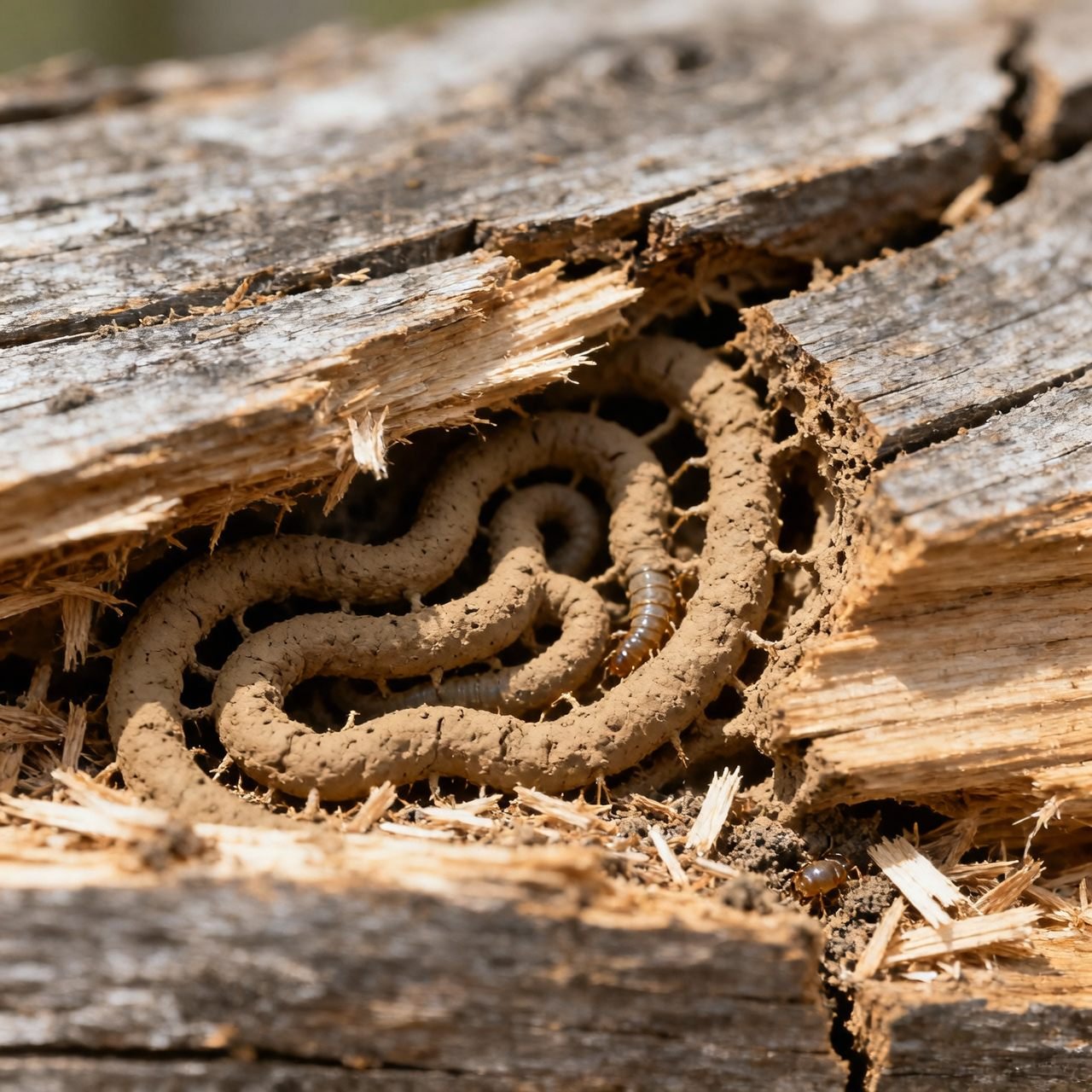
Of all the termite warning signs, mud tubes are the most recognizable — and in Tallahassee, where subterranean termites are the dominant species, they're one of the most important things a homeowner can learn to spot. Here's how to read them.
What mud tubes are
Subterranean termites live in the soil and need moisture to survive, so they build pencil-width tubes of mud, soil and saliva to travel from the ground to the wood they're eating without exposing themselves to dry air and predators. Finding these tubes means subterranean termites are actively bridging from the soil into your structure.
Where to look
- The foundation — exterior walls, especially near ground level.
- Crawl-space piers and walls — a very common spot in Tallahassee's raised-foundation homes.
- Inside the garage and around slab edges.
- Where wood meets soil — porch posts, deck supports, fence lines against the house.
Are the termites still active?
Here's a useful test: gently break open a small section of tube. If it's repaired within a few days and you see live, pale, soft-bodied termites, the colony is active. If it stays broken and empty, the tube may be abandoned — but that doesn't mean you're in the clear, because the colony may simply have moved to another entry. Either way, it's an inspection, not a DIY diagnosis.
Don't just knock the tubes down. Destroying tubes doesn't kill the colony — the termites re-route. And spraying them accomplishes nothing at the colony level. The tube is a symptom; the colony in the soil is the problem, and treating it (liquid barrier or bait system) is the fix.
Why Tallahassee homes are prone
Our damp soil, humidity, mature tree cover, and abundance of older homes with wood near grade are ideal for subterranean termites. It's why annual termite inspection genuinely pays for itself here, especially in established neighborhoods like Betton Hills. See also drywood vs subterranean termites.
Quick answers
Do mud tubes always mean an active infestation?
They mean subterranean termites have been bridging into the structure. Whether that specific tube is currently active takes an inspection to confirm — but any mud tube warrants one.
Can I treat mud tubes myself?
No — knocking them down or spraying them doesn't reach the colony in the soil. A liquid barrier or bait system is what actually treats subterranean termites.
Found mud tubes on your foundation? Book a free inspection and we'll confirm activity and lay out your options.
Dealing with this pest right now?
A free inspection identifies the pest, the entry points and an exact quote — in writing, with no obligation.